Side Ancient City

Side Ancient City

Why visit

Who will love it

Prioritize Side Ancient City if you want to see remarkably preserved Roman ruins, such as the seaside Temple of Apollo and a massive 15,000-seat theater, blended directly into a modern resort town. It is perfect for families and casual sightseers staying in the Manavgat area who want to easily combine historical walks with beach time and dining.

Who should skip it

Skip it if you are staying in western Antalya and want to avoid a 75-kilometer drive, or if you prefer quiet, isolated ruins like Termessos.

Because the ancient streets are integrated with active shopping districts and hotels, it can feel highly commercialized; if you go, visit in the late afternoon to enjoy the sunset by the temple after the tour buses depart.

What to know beforehand

Side functions as an open-air museum where ancient colonnaded streets lead directly into a bustling district of shops and cafes. In practice, this layout makes the history incredibly accessible but can feel overwhelming due to the lack of shade and constant commercial activity.

It is an ideal destination for photographers and families who appreciate having amenities nearby, while those seeking a silent, scholarly atmosphere may find the modern tourist infrastructure distracting.

To find a moment of peace, prioritize the inland ruins near the Nymphaeum and the Great Gate before moving toward the harbor. While the main site is free to roam, the massive Roman Theater and the Side Museum require individual tickets paid in TRY; having a MuseumPass Mediterranean is the most efficient way to skip the ticket booth queues.

Aerial panorama of Konyaalti Beach, Antalya promenade, and mountains under clear sky

🎫 Tickets, tours & discounts

The ancient city of Side is unique because much of it is integrated into the modern town, allowing you to see the monumental gate and main streets for free. However, the two most significant sites—the Ancient Theater and the Side Museum—require paid admission.

If you only have an hour, the Theater is the priority as it is one of the best-preserved Roman structures in the region. The Museum, housed in restored Roman baths, is worth the extra cost for those interested in intricate sarcophagi and statues found on-site.

  • Free Access: Main colonnaded streets, the Agora ruins, and the Temple of Apollo.
  • Paid Entry: The Great Theater and the Side Archaeological Museum.
  • MuseumPass Mediterranean: The most efficient choice if you plan to visit Aspendos and Perge within a week, as it covers all three and eliminates the need to queue for individual tickets.
TipA common mistake is paying for individual tickets at every stop. If you are exploring the Antalya coast for more than three days, the regional MuseumPass pays for itself by the third major site.

To avoid the intense heat and the largest crowds, arrive at the Theater entrance exactly when it opens at 8:00 AM. Most tour buses from Antalya and Alanya arrive between 10:00 AM and 11:00 AM, which is when the narrow paths become congested.

For photographers, the 'golden hour' starts about 90 minutes before sunset, specifically at the Temple of Apollo by the harbor, where the white marble columns glow against the sea.

Solo travelers should aim for the early morning for a quiet atmosphere, while families are better off visiting in the late afternoon when the sea breeze makes the walk through the ruins more comfortable. Note that the Theater closes earlier than the open-access ruins, so time your paid visit before heading to the harbor for dinner.

Side is frequently bundled into 'Triple Crown' day tours that include the Aspendos Theater and the Perge ruins. These organized combos are practical because they handle the 40-minute transit between sites that is otherwise difficult to manage without a rental car.

For independent travelers, the official MuseumPass Mediterranean is the primary discount tool. It grants one-time entry to all major archaeological sites in the Antalya province.

Children under 12 generally enter the paid sections for free, though you should have a passport photo or digital copy ready to prove age at the turnstiles. There are no specific 'off-peak' price drops, as the government-regulated fees remain consistent throughout the season.

A guided tour is highly recommended for Side because the site lacks extensive English signage explaining the complex layers of Greek, Roman, and Byzantine history. A guide can point out the sophisticated ancient drainage systems and the specific functions of the various Agora buildings that look like simple stone heaps to the untrained eye.

If your goal is simply to enjoy the seaside atmosphere and take iconic photos of the Temple of Apollo, a self-guided walk is sufficient. The town is very walkable, and the layout of the main ruins follows a straight path from the city gate to the harbor.

However, if you want to understand why Side was a notorious pirate hub and a center for the slave trade, the context provided by a professional guide is invaluable.

The Temple of Apollo is located at the very tip of the peninsula. While it is free to visit, it is often roped off to prevent climbing on the marble; the best views are from the surrounding pedestrian plaza.

Ruined chamber with steps and stone trough at Perge
Weather nowLight haze
Antalya, Republic of Türkiye
NowMostly clear 🌤️
Temperature30°C
VisibilityGood
AerosolsLight haze · AOD 0.24

Conditions are mixed — plan accordingly and check for covered areas.

AOD — how much dust and haze in the air dim the distant view. 0 clean, >0.4 noticeable, >0.7 heavy.

Crowd indicator

Crowds peak in the late afternoon and at sunset when temperatures drop and visitors flock to the Temple of Apollo.

When to go?

Mini-calculator based on crowd levels by day and time.

Best time at Mon — 12:00

This day is usually noticeably busy. This slot has a higher chance of a comfortable visit: Intense heat, visitors seek shade. Weather is currently not ideal: mostly clear 🌤️.

30–50% · Quiet60–80% · Moderate90–100% · Crowded

Nearest days

TodayBusy summer day with heavy congestion expected at sunset.
10:0080%
12:0070%
14:0065%
16:0080%
17:0090%
18:00100%
TomorrowExpect thicker crowds due to weekend visitors joining the resort tourists.
10:0085%
12:0075%
14:0070%
16:0085%
17:0095%
18:00100%
Day after tomorrowHigh weekend traffic continues, particularly in the late afternoon.
10:0085%
12:0075%
14:0070%
16:0085%
17:0095%
18:00100%
Large coastal waterfall plunging into the sea beside flowering shrubs

How to find the entrance

1
Arrive at Side OtogarPark your vehicle or exit the dolmus at the main transport hub outside the pedestrian zone
2
Take the electric shuttleBoard the frequent tractor-style shuttle or walk the paved path toward the ancient city walls
3
Pass through Vespasian GateEnter the historical site by walking through the monumental archway that marks the old city boundary
4
Access the Theater entranceFollow the signs to the ticket booths located directly in front of the Roman Theater

Reaching the Entrance

The most confusing part for visitors is the vehicle restriction. The entire historical peninsula is a pedestrian-only zone. If you arrive by car, taxi, or dolmus, you will be dropped off at the large parking terminal near the Vespasian Gate. From this point, it is a one-kilometer walk to the harbor.

To save time, board the electric tractor-shuttle that runs continuously between the parking area and the village center for a small fee in TRY.

Once inside the ruins, the site is divided into open public areas and ticketed monuments. You can explore the colonnaded streets, the Nymphaeum, and the Temple of Apollo without a ticket. However, the Roman Theater and the Side Museum require paid entry. Tickets are sold at booths directly in front of each monument entrance.

  • The walk from the parking lot to the Temple of Apollo takes about 20 minutes on foot through the ruins.
  • Separate tickets are required for the Theater and the Museum; a combined ticket is the most efficient option if visiting both.
  • Expect a security bag check at the entrance to the Roman Theater.
ImportantThe ancient streets consist of original uneven stones and sand. Wear comfortable walking shoes and bring water, as there is no shade until you reach the cafes near the harbor.
Aerial of Antalya old town with minaret, red roofs, sea, and mountains

Practical limits & what to bring

Side is a unique living museum where ancient ruins are integrated into a modern resort town. You should prepare for extensive walking on a variety of surfaces, including dusty trails, uneven ancient marble, and sandy paths.

The archaeological site is almost entirely exposed to the elements, and the heat during the day is intense as it reflects off the stone structures with virtually no shade available until you reach the harbor shops.

  • Forbidden: Drones and professional video equipment (including large tripods) are prohibited without a specific permit from the Ministry of Culture and Tourism.
  • Forbidden: Alcohol and glass bottles.
  • Forbidden: Spray paint or any marking tools.
  • Forbidden: Removing any stones, pottery shards, or historical fragments from the ground.
  • Allowed: Personal cameras and smartphones for private use.
  • Allowed: Plastic water bottles and small snacks.
  • Allowed: Small backpacks and sun protection gear.

There are no central luggage storage facilities or lockers at the Ancient City entrance or the Theater. Because the site is spread across a public peninsula, you must carry all your belongings with you. Large suitcases are highly discouraged as the cobblestone streets and sandy ruins make them impossible to maneuver.

Strollers are permitted on the main paved roads leading to the harbor, but they cannot be taken into the Ancient Theater or the Side Museum galleries. You will need to leave them at the ticket checkpoints at your own risk or use a baby carrier for these specific sections.

TipWear sturdy, closed-toe shoes with good grip. The ancient marble walkways have been polished smooth by centuries of use and become extremely slippery, even when dry.

Location and what's nearby

About the District

  • A living open-air museum where ancient columns stand directly next to modern shops and cafes on a narrow peninsula.
  • Pedestrian-only atmosphere in the old town center, perfect for slow evening strolls and sunset photography by the water.
  • High density of historical landmarks, souvenir boutiques, and leather shops catering to international tourists.
  • Vibrant waterfront character with a busy harbor, offering a mix of archaeological depth and Mediterranean resort energy.

Nearby on Foot (up to 15 minutes)

  • Temple of Apollo — Iconic white marble columns standing at the very tip of the peninsula · 8 minutes
  • Side Museum — Ancient Roman baths converted into a museum housing impressive statues and sarcophagi · 5 minutes
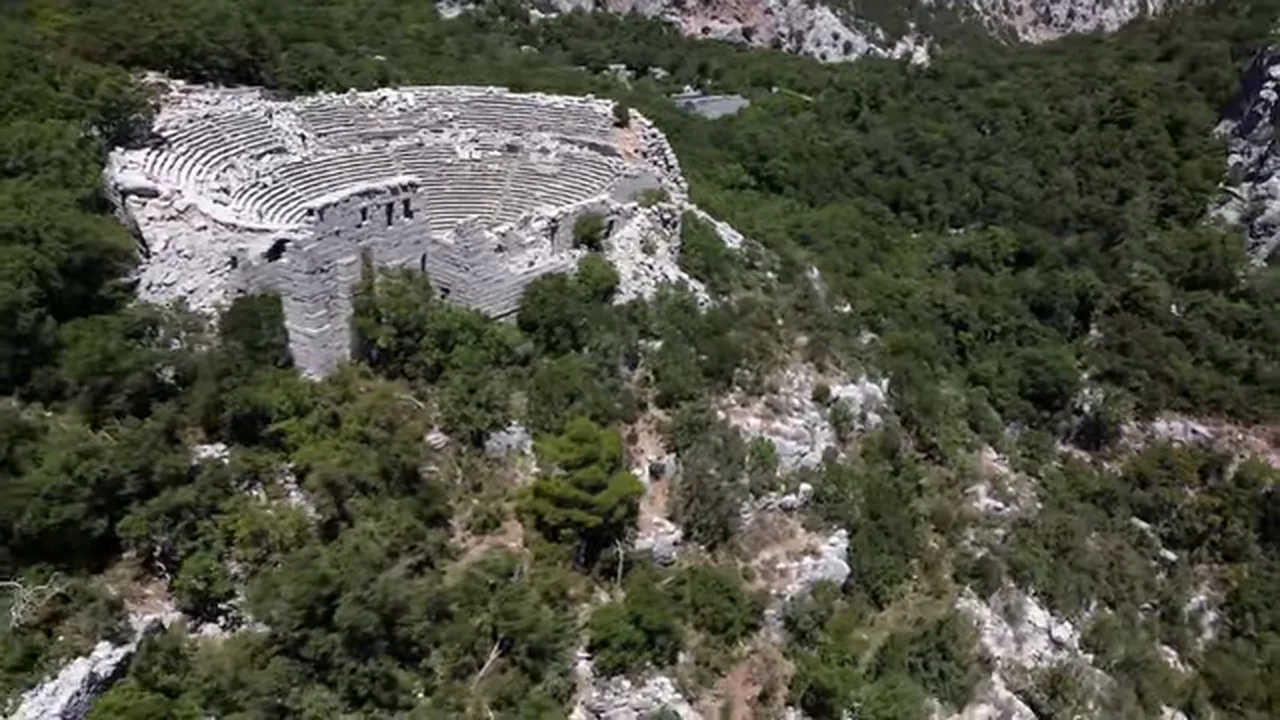
  • Side Antique Theater — Massive 2nd-century arena that once seated 15,000 spectators for gladiatorial games · 4 minutes
  • Side Harbor — Scenic marina lined with wooden excursion boats and waterfront seafood terraces · 6 minutes
  • Vespasian Gate — Grand monumental entrance marking the transition from the modern road to the ruins · 10 minutes
  • State Agora — Remains of the ancient administrative center and slave market near the library · 7 minutes

Within 15–30 Minutes by Transport

  • Manavgat Waterfall — Wide, powerful cascades surrounded by shaded tea gardens and local picnic spots · 15 minutes by taxi
  • Novada Mall — Large modern shopping center for international brands and Turkish department stores · 20 minutes by taxi
  • Seleukeia — Well-preserved hilltop ruins of an ancient city nestled in a pine forest · 25 minutes by taxi

Where to Eat Nearby

  • Karma — Mediterranean fusion with a stylish terrace overlooking the sea and harbor · expensive · reservation recommended · 7 min on foot
  • Side Orfoz — Fresh seafood and traditional Turkish mezes right on the waterfront · above average · reservation recommended · 6 min on foot
  • Azumare — Wine and tapas bar famous for sunset views and a relaxed lounge vibe · average · no reservation needed · 9 min on foot
  • Aphrodite Restaurant — Classic Turkish hospitality with a focus on grilled fish and harbor views · average · no reservation needed · 5 min on foot

Ready-made Day Itinerary

Start your morning at the Vespasian Gate and explore the Side Antique Theater before the midday heat. Head to the Side Museum to see the artifacts, then enjoy a seafood lunch at Side Orfoz by the harbor. Spend the afternoon wandering the narrow streets of the old town, finishing at the Temple of Apollo for sunset followed by dinner at Karma.

NoteWalking the peninsula is best done in the late afternoon to avoid the strongest sun and to catch the monuments as they begin to glow at dusk.
Reference

Facts

Read more
  • Theater capacity: 15,000 spectators, making it the largest ancient theater in the Pamphylia region.
  • Temple of Apollo: 5 massive Corinthian columns were re-erected during restoration to preserve the iconic harbor landmark.
  • Nymphaeum width: 35 meters, originally standing three stories high as one of Anatolia's most ornate monumental fountains.
  • City walls: 6 kilometers of fortifications protected the peninsula, featuring some of the best-preserved Hellenistic masonry in Turkey.
  • Aqueduct length: 30 kilometers of stone channels transported fresh water from the Melas River to the city center.
  • Main colonnaded street: 250 meters of original marble paving still connects the main gate to the central agora.
  • Myth: The Temple of Apollo was the only major religious structure at the harbor. Reality: It stood in a twin-temple complex alongside the equally large Temple of Athena.
  • Myth: Side was founded as a Roman administrative outpost. Reality: It was established by Greek settlers from Cyme in the 7th century BC, centuries before Roman arrival.
  • Myth: The ancient city is a fenced-off museum separate from the living town. Reality: Modern Side is built directly over the ruins, with ancient walls serving as foundations for current shops.
  • Myth: Side has always been a peaceful merchant port. Reality: For centuries, it served as the primary Mediterranean base for Cilician pirates and a major slave trade hub.
  • The city maintained its own indigenous language, Sidetan, which used a unique script that remained in use until the 3rd century BC.
  • Unlike most Greek theaters built into hillsides, the Great Theater of Side is a freestanding Roman structure supported by massive vaulted arches.
  • Many modern boutiques and cafes in the center feature glass floors, allowing visitors to see 2,000-year-old villas and mosaics beneath their feet.
  • The ancient public latrines near the theater were designed for 24 people and featured a continuous flow of water for hygiene.
  • Submerged remains of the ancient harbor breakwater are still visible through the clear water near the tip of the peninsula during calm seas.
Background

History

Read more

The majority of the monumental structures visible today date back to the 2nd and 3rd centuries, when Side reached its peak under Roman rule. The massive theater, which could hold 15,000 spectators, and the iconic Temple of Apollo at the harbor's edge were built during this era of prosperity.

These ruins showcase the city's former status as a cultural and political powerhouse in Asia Minor.

Where History Meets the Modern Coast

What makes Side unique for today's visitor is the seamless integration of ancient ruins with the modern resort town. You can walk past glass-floored walkways revealing Byzantine foundations beneath your feet while heading to a contemporary cafe.

The site remains a rare example of an ancient city that never truly disappeared, evolving from a strategic naval base into one of the Mediterranean's most significant archaeological open-air museums.

♿ Accessibility & families

Side Ancient City

Partially accessible; flat main paths with uneven ancient paving.

High; open-air site with free entry for children under 12.

Accessibility and Family Policy

Side Ancient City is an expansive open-air archaeological site that offers mixed accessibility. The main colonnaded streets and the plaza leading to the Temple of Apollo are relatively flat and can be navigated by wheelchair users and strollers.

However, the ancient marble and stone surfaces are often uneven, weathered, and bumpy, which may require assistance for manual wheelchair users. The Roman Theatre is the least accessible part of the site, as it features steep, high stone steps and lacks ramps or elevators to the upper galleries.

For Families and Children

Children under 12 receive free admission to the paid sections of the site, including the Roman Theatre and the Side Museum. You must present a valid passport for each child at the ticket booth to secure the free entry.

There are no specific age restrictions for the ruins, but visitors under 16 must be accompanied by an adult.

Strollers are permitted throughout the site, though models with large, sturdy wheels are significantly easier to manage on the sandy patches and historic stone paths than lightweight strollers with small plastic wheels.

Practical Constraints

The site is almost entirely exposed to the sun with very little natural shade. Families with young children or elderly visitors should plan their visit for early morning or late afternoon to avoid peak heat.

While the core archaeological zone is pedestrian-oriented, it blends into the modern village of Side where narrow streets may have light vehicle traffic.

Accessible restrooms and basic baby-changing facilities are available near the main entrance and the Side Museum, but are not found within the deeper sections of the ruins.

🏢 On-site amenities

Side Ancient City

Antalya, Turkey

Public restrooms are located near the main entrance by the Ancient Theater and inside the Side Museum. A small fee in TRY is required for use unless you are entering the ticketed museum areas.

There are no cafes or restaurants inside the fenced archaeological zones like the Theater. However, the ruins are integrated with the modern town of Side, where numerous casual cafes and waterfront restaurants are available within a short walk of the Temple of Apollo and the harbor.

Official museum gift shops are situated at the entrances to the Theater and the Side Museum. These shops sell archaeological guidebooks, high-quality replicas, and standard souvenirs such as magnets and postcards.

Free public Wi-Fi is not available within the site. There are no public drinking fountains, but bottled water is sold at kiosks near the entrance. Visitors are permitted and encouraged to bring their own water.

Dedicated nursing rooms are not available on-site. Prayer facilities can be found at the Fatih Mosque, which is located at the northern edge of the ancient city area.

Reliability & freshness

UpdatedJune 20, 2026

I live in Antalya and, after seven years here, I write clear guides on beaches, buses, neighbourhoods, and daily costs.